
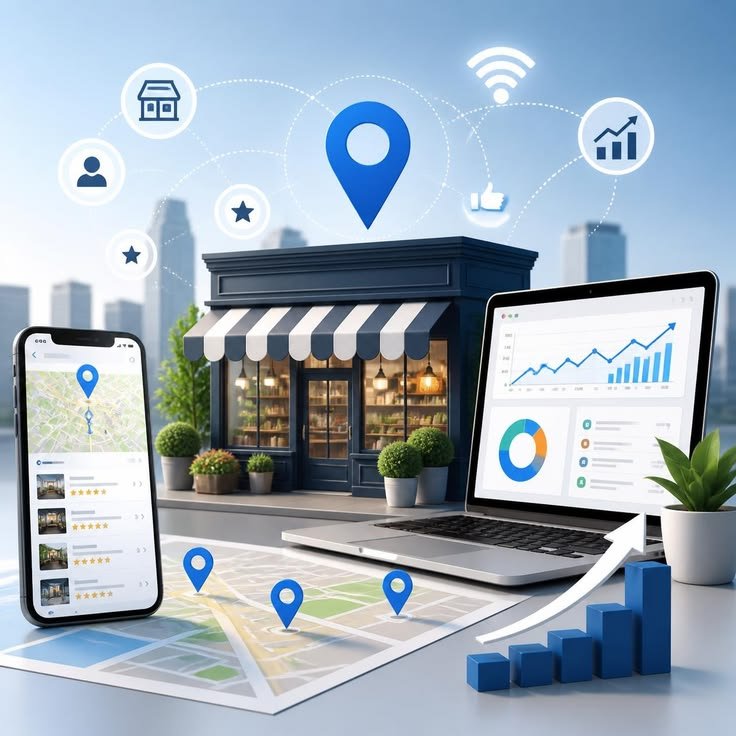
In today’s digital world, customers often search online before visiting a shop or choosing a local service. Searches such as “best bakery near me,” “digital marketing agency in Malappuram,” and “salon near me” help people find businesses in their area.
This is where Local SEO becomes important. Local SEO helps businesses improve their visibility in location-based search results, making it easier for nearby customers to discover their products and services.
Whether you own a small shop, restaurant, salon, or service-based business, local SEO can help you attract more relevant customers and grow your business online.
What Is Local SEO?
Local SEO, or Local Search Engine Optimization, is the process of optimizing a business’s online presence to improve its visibility in local search results on Google and other search engines.
For example, if someone searches for “best clothing shop in Perinthalmanna,” Google may display relevant businesses, a map, customer reviews, contact details, and website links.
Local SEO helps your business appear in relevant local results when potential customers search for products or services you offer.
Why Is Local SEO Important for Businesses?
Local SEO is especially valuable for businesses that serve customers in a specific city, town, or nearby area.
Here are some important benefits of local SEO:
1. Improves Local Visibility
Local SEO helps your business appear in relevant local search results, allowing more nearby customers to discover your business.
2. Attracts Potential Customers
When people search for a product or service in their area, they often have a specific need. Local SEO helps your business reach people who may be interested in what you offer.
3. Builds Trust and Credibility
An accurate business profile, genuine customer reviews, and useful website content help customers learn more about your business and make informed decisions.
4. Increases Website Traffic and Enquiries
A well-optimized local presence can encourage customers to visit your website, call your business, request directions, or submit an enquiry.
5. Supports Small Businesses
Local SEO gives small and medium-sized businesses an opportunity to compete for relevant local searches without relying entirely on paid advertising.
How to Improve Your Local SEO Rankings
You can improve your local search visibility by following these practical strategies.
1. Create and Optimize Your Google Business Profile
A Google Business Profile helps your business appear on Google Search and Google Maps when relevant customers search locally.
To optimize your profile:
- Add your correct business name, address, and phone number.
- Choose the most relevant primary and additional business categories.
- Add accurate opening hours.
- Upload high-quality photos of your business, products, or services.
- List the services or products you offer where applicable.
- Keep your information updated.
A complete and accurate profile helps customers understand your business and how to contact you.
2. Use Local Keywords
Local keywords include a product or service combined with a location.
For example:
- Digital marketing agency in Malappuram
- Best clothing shop in Perinthalmanna
- SEO services in Kerala
- Beauty salon near me
Use relevant local keywords naturally in your website headings, page titles, service descriptions, and blog posts. Avoid repeating keywords unnaturally just to influence rankings.
3. Keep Your Business Information Consistent
Your business name, address, and phone number should be accurate and consistent across your website, Google Business Profile, and relevant online directories.
This information is often called NAP: Name, Address, and Phone number.
If your business details change, update them across important platforms. Consistency helps customers find the correct information and reduces confusion.
4. Collect Genuine Customer Reviews
Customer reviews can influence how people evaluate your business before making a purchase or booking a service.
Encourage satisfied customers to share honest feedback on your Google Business Profile. Respond professionally to both positive and negative reviews.
Never buy fake reviews or offer incentives in exchange for positive reviews. Focus on providing good service and making it easy for customers to share their genuine experiences.
5. Optimize Your Website for Local Searches
Your website should clearly explain what your business offers and which areas you serve.
Follow these tips:
- Include your target location naturally in relevant page titles and headings.
- Create useful service pages for your main offerings.
- Add your business contact details to your Contact page.
- Make your website mobile-friendly.
- Improve page loading speed.
- Add clear calls to action, such as “Call Now” or “Request a Quote.”
For example, a digital marketing agency serving Malappuram can create a useful service page explaining its SEO, social media marketing, and advertising services for businesses in that area.
6. List Your Business in Relevant Online Directories
Online business directories can help people discover your business and verify its details.
Choose trustworthy and relevant directories, industry-specific listings, and local business websites. Make sure your information is accurate before submitting your business.
Quality and relevance are more important than submitting your business to hundreds of low-quality directories.
7. Create Local Content
Publishing helpful content related to your location can make your website more useful to local audiences.
For example, a business in Malappuram could publish blog posts about local shopping trends, services available in the area, or tips for choosing a local provider.
Create content that answers real customer questions instead of producing multiple similar pages with only the location name changed.
8. Build Relevant Local Backlinks
Backlinks are links from other websites to your website. Relevant links can help search engines understand your business’s online presence.
You can work toward earning local backlinks by:
- Collaborating with reputable local businesses.
- Participating in community events.
- Getting featured in local news or publications.
- Joining legitimate industry associations.
- Publishing useful resources that other websites want to reference.
Focus on relevant, trustworthy links rather than buying spammy backlinks.
9. Make Your Website Mobile-Friendly
Many people search for local businesses using their smartphones, often when they need directions, opening hours, or contact information.
Ensure that your website works properly on mobile devices. Use readable text, easy navigation, fast-loading pages, and visible contact buttons.
A convenient mobile experience helps potential customers find information and take action.
10. Track Your Local SEO Performance
Local SEO requires regular monitoring to understand what is working.
Use tools such as Google Search Console and Google Analytics to review relevant search performance and website activity. Google Business Profile performance data, where available, can also help you understand how customers discover and interact with your profile.
Monitor metrics such as:
- Local search visibility
- Website clicks from search
- Calls and direction requests
- Relevant keyword performance
- Customer enquiries and conversions
Use this information to identify opportunities and improve your strategy over time.
Common Local SEO Mistakes to Avoid
Avoid these common mistakes when optimizing your business for local searches:
- Leaving your Google Business Profile incomplete or outdated.
- Using incorrect business contact information.
- Stuffing location keywords into every sentence.
- Buying fake customer reviews.
- Creating duplicate or low-quality location pages.
- Ignoring customer reviews and questions.
- Neglecting mobile usability.
- Expecting immediate results without regular optimization.
Local SEO takes time, and results depend on competition, relevance, distance, business reputation, and other factors. Focus on providing accurate information and a useful customer experience.
Conclusion
Local SEO is an important digital marketing strategy for businesses that want to reach customers in their nearby areas. By optimizing your Google Business Profile, using relevant local keywords, collecting genuine reviews, improving your website, and creating helpful local content, you can strengthen your online presence.
Whether you run a small shop, a restaurant, or a service-based business, investing in local SEO can help more potential customers discover and contact you.
Start optimizing your local online presence today and make it easier for nearby customers to find your business.
Frequently Asked Questions (FAQs)
1. What is Local SEO?
Local SEO is the process of improving a business’s online visibility for relevant location-based searches on search engines such as Google.
2. Is Local SEO important for small businesses?
Yes. Local SEO helps small businesses reach nearby customers who are searching for relevant products or services.
3. How can I improve my local SEO rankings?
Optimize your Google Business Profile, use relevant local keywords, maintain accurate business details, collect genuine reviews, and improve your website.
4. Is Google Business Profile free?
Yes. Creating and managing a Google Business Profile is free for eligible businesses, although some advertising and third-party services may involve costs.
5. How long does Local SEO take to show results?
There is no guaranteed timeline. Results depend on factors such as competition, your existing online presence, business relevance, and the consistency of your optimization efforts.
6. What is the difference between SEO and Local SEO?
SEO improves a website’s visibility in organic search results more broadly. Local SEO focuses on improving visibility for relevant searches connected to a specific geographic area.
Local SEOhttps://developers.google.com/search/docs/fundamentals/seo-starter-guide?utm_source=chatgpt.com